Send us a few photos of what you have and we'll respond with a transparent, no-obligation quote — usually within 24 hours.
GoldfilledScrap.com was founded to bring fair, transparent pricing to a corner of the scrap industry that too often cheats sellers. Gold-filled material is undervalued by pawnshops and rejected by many refiners — we built our business specifically to handle it right.
Gold-filled (GF) is a layered metal made by mechanically bonding a thick sheet of real karat gold to a base metal — usually brass. It's not plating. By U.S. law, true gold-filled must contain at least 5% gold by weight, making it dramatically more valuable than gold-plated or costume jewelry.
Unlike plated jewelry, gold-filled contains a meaningful layer of solid karat gold (typically 10K, 12K, or 14K) that can be chemically recovered during refining.
Stamps like 1/20 12K GF mean 1/20th (5%) of the total weight is 12-karat gold. Common ratios are 1/10, 1/20, and 1/40 — each affects the payout.
Gold-filled scrap has real value, and many people significantly underestimate what their material is worth.
Vintage eyeglass frames, pocket watch cases and chains, Victorian-era jewelry, religious medals, and pen caps are frequent gold-filled finds in estates and thrift lots.
Gold-plated items have a microscopic flash of gold (under 0.05%). Most refiners won't touch them. Gold-filled has 100–1,000× more gold and is highly desirable.
We accept clean GF, mixed lots, broken chains, eyeglass frames, watch cases, and even low-grade material.
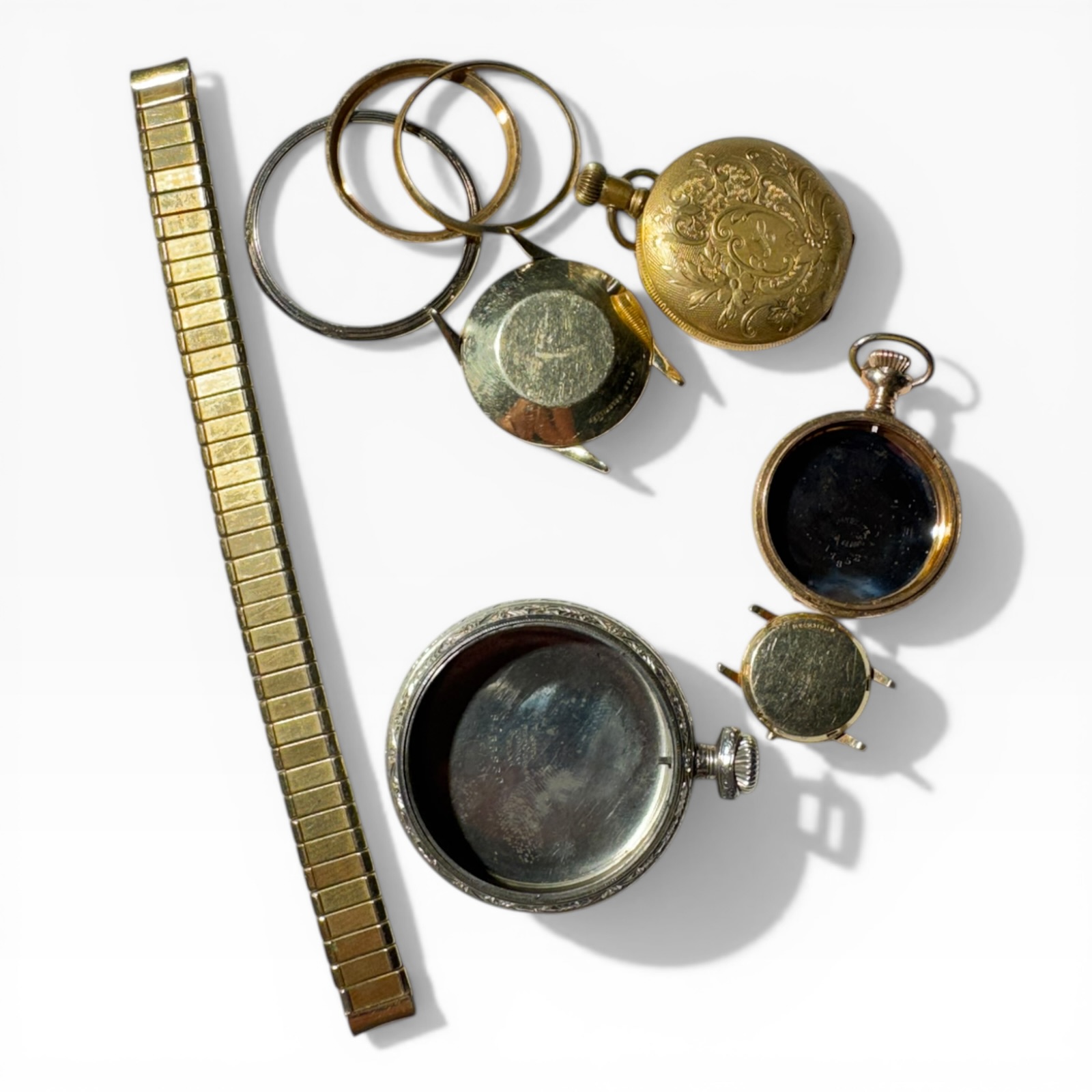
Not sure what you have? Here are the most reliable ways to tell gold-filled apart from plated, solid karat, or costume jewelry.
Check clasps, inside rings, and watch case backs for markings like GF, G.F., 1/10 12K GF, 1/20 14K GF, or Rolled Gold Plate (RGP).
Gold-filled feels substantially heavier than costume jewelry and has the same warmth as solid gold, without flaking or green oxidation at the edges.
Plated items show brassy patches where the thin gold layer wore through. GF rarely wears through, but when it does, the exposed layer is still yellow-ish (not green or silver).
True gold-filled will not stick to a magnet. If it does, it's likely plated steel or costume. (This rules out fakes, but doesn't confirm GF on its own.)
Most gold-filled jewelry was made between 1880 and 1970. Victorian lockets, Art Deco watches, and 1940s eyeglass frames are very commonly GF.
Clear close-ups of stamps are the fastest way to get an accurate answer. We'll ID your material for free, whether you sell to us or not.
Four steps from your scrap drawer to a check in your hand.
Upload 1–5 clear photos of your material using the form below. Include any visible stamps.
Our experts will be in touch with an estimated purchase price based on the photos you provide.
After communicating with our experts, you'll mail your items in for final evaluation.
After your items have been inspected, we'll issue you a check for the agreed amount.
Fill out the form and attach up to 5 photos of your material. We'll review and reply with a free, no-obligation quote — usually the same business day.
info@goldfilledscrap.com
Your photos and contact info are used only to prepare your quote. We never share your data or send marketing emails without consent.
No. Mixed lots are perfectly fine. We sort and weigh by stamp at our facility. If you'd like, you can pre-sort for your own records, but it won't change the payout.
We weigh every lot on NTEP-certified scales — the same legal-for-trade standard used by jewelers and refiners nationwide. NTEP certification means the scale has been independently tested and approved for commercial transactions, so you can trust that the weight on your offer is accurate and verifiable.
No problem. If your items are plated, costume, or another metal entirely, we'll let you know. Many sellers discover they have a mix of GF, plated, and even some solid karat pieces they didn't realize.